Hotels in Évora: Where to Stay in 2025
Updated 3 November 2026 · 40 real hotels
The historic walled center, covering the parishes of São Mamede, Sé, São Pedro and Santo Antão, is the best base for most visitors: it puts Roman temples, Gothic churches and the city's finest restaurants within walking distance. Travelers seeking more space or a quieter setting can look toward Malagueira or the rural surroundings of Nossa Senhora de Machede.
Your stay in Évora, in one conversation
Your travel assistant builds hotels, activities and dining around your wishes, dates and budget.
Where to stay on any budget?
A real selection, real prices, from the most affordable to the showstopper.


| Hotel | Area | Rating | Price / night |
|---|---|---|---|
| Casa Do Vale Hotel ★★★ | Malagueira et Horta das Figueiras | ★ 4.2 | 41 €/nuit |
| StayInn City - Évora ★★★ | Centre Historique d'Évora | ★ 4.6 | 43 €/nuit |
| Stay Hotel Évora Centro ★★★ | Centre Historique d'Évora | ★ 4.1 | 50 €/nuit |
| ibis Evora Hotel ★★★ | Malagueira et Horta das Figueiras | ★ 4.1 | 55 €/nuit |
| Limehome Evora Rua de Machede 52 ★★★ | Centre Historique d'Évora | ★ 4.4 | 63 €/nuit |
| Évora O Cante Hotel ★★★★ | Malagueira et Horta das Figueiras | ★ 4.7 | 67 €/nuit |
| Holiday Inn Express Evora by IHG ★★★ | Bacelo et Senhora da Saúde | ★ 4.7 | 67 €/nuit |
| Guesthouse Palácio Diana ★★★★ | Centre Historique d'Évora | ★ 4 | 70 €/nuit |
| Noble House Essence Évora - by Unlock Hotels ★★★★ | Centre Historique d'Évora | ★ 4.5 | 71 €/nuit |
Our hotel profiles in Évora


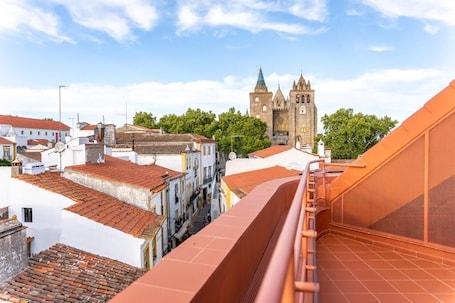
Évora: a living open-air museum in the Alentejo
Évora sits at the heart of the Alentejo plain, roughly 130 km east of Lisbon, encircled by medieval walls that have protected it for centuries. UNESCO granted it World Heritage status in 1986, recognizing a city center where a Roman temple, a Moorish street grid, Gothic and Manueline monuments, and whitewashed houses trimmed in ochre all coexist without feeling like a theme park. The pace here is slow by design, the light is intense for much of the year, and the local table, built around black pork, Alentejo bread, sheep's cheese and powerful regional wines, is reason enough to linger an extra night.
The city is compact enough to explore entirely on foot from a central hotel, yet the Alentejo countryside surrounding it rewards anyone who rents a car for a day. Cork oak groves, dolmens older than Stonehenge and wine estates producing some of Portugal's most acclaimed reds all lie within a short drive. Whether you arrive for a weekend or use Évora as a base for the wider region, choosing the right neighborhood shapes the whole experience.
Which area to stay in Évora?
- São Mamede, Sé, São Pedro and Santo Antão (walled center): The prime location for most visitors. Cobblestone lanes connect the Roman Temple of Diana, the Cathedral, the Chapel of Bones and the Giraldo Square within minutes on foot. Restaurants, wine bars and independent shops cluster here, and noise levels stay low after dark. The largest selection of hotels in Évora is concentrated in this area, from the converted convent of the Pousada Convento de Evora to more intimate addresses like ADC Albergaria do Calvário and MouraSuites Hotel.
- Malagueira and Horta das Figueiras: A quieter residential district immediately outside the walls, developed in part by the celebrated architect Álvaro Siza Vieira. Staying here means a short walk or taxi ride to the historic center but generally more space, easier parking and a local, unhurried atmosphere. The Vila Gale Evora Hotel and Vitória Stone Hotel are both based in this area.
- Nossa Senhora de Machede: A rural parish a few kilometers east of the city, surrounded by Alentejo farmland. Not practical without a car, but ideal for travelers who prefer a countryside retreat. The Octant Evora, a design-forward rural hotel, is the main accommodation option here.
- Évora centro (Giraldo Square fringe): The blocks immediately surrounding Praça do Giraldo, the city's main square, offer the greatest convenience for sightseeing and dining. Several guesthouses and smaller hotels occupy historic buildings on these streets, including the Guesthouse Palácio Diana.
- Outside the walls, north and east: Pockets of accommodation exist just beyond the medieval gates. These spots trade some medieval atmosphere for easier road access and slightly lower prices, while remaining a comfortable ten-to-fifteen-minute walk from the main monuments.
Good to know
- Arrive by train or bus from Lisbon for a stress-free start: Direct trains from Lisbon Oriente take roughly ninety minutes and drop you at Évora station, about a ten-minute walk from the walled center. Rede Expressos coaches are equally fast and stop centrally. If you drive, note that much of the historic center is restricted-traffic; check with your hotel about a drop-off point and parking.
- Book well ahead for spring and early autumn: April through June and September through October are the most popular periods. The weather is mild, the Alentejo countryside is at its most photogenic, and major festivals occasionally fill the city. Rooms at well-rated central hotels can sell out weeks in advance during these windows.
- Summer heat is serious: July and August temperatures regularly exceed 38°C in the Alentejo. If you visit then, plan outdoor sightseeing for early morning, choose a hotel with air conditioning confirmed, and keep afternoons for shaded courtyards, museums and long lunches.
- A car unlocks the wider region: Évora itself is walkable, but the megalithic sites (Anta Grande do Zambujeiro, the Cromeleque dos Almendres), nearby wine estates and villages like Monsaraz are difficult to reach by public transport. Renting a car for at least one day is worthwhile if your schedule allows.
- Eat and drink local, deliberately: Alentejo cuisine is distinct from the rest of Portugal. Look for 'açorda' (bread-based soups), migas, carne de porco preto and local wines labeled 'DOC Alentejo'. The best restaurants in the walled center often require a reservation, especially on weekends.
What to know about hotels in Évora?
What is the best area to stay in Évora?+
The walled historic center, covering São Mamede, Sé, São Pedro and Santo Antão, is the best choice for the majority of visitors. It places every major monument within easy walking distance and offers the widest selection of hotels across different budgets, from the Guesthouse Palácio Diana at 64 euros per night to the five-star Pousada Convento de Evora at 159 euros per night. Travelers with a car who prefer countryside quiet will appreciate the rural setting of Nossa Senhora de Machede.
When is the best time to visit Évora?+
Spring (April to June) and early autumn (September and October) offer the most comfortable conditions: warm but not extreme temperatures, manageable crowds and a lively local calendar. Winter is mild by northern European standards and rewards visitors with lower prices and an authentic, unhurried atmosphere. Summer is the least comfortable season due to intense heat, though the city stays active and evenings are pleasant.
How do I get from Lisbon to Évora?+
The most convenient options are the direct train from Lisbon Oriente (roughly 1.5 hours) and Rede Expressos coaches, which depart frequently from Lisbon's Sete Rios terminal and arrive near the center of Évora. By car, the A6 motorway connects Lisbon to Évora in about 90 minutes depending on traffic. There is no direct airport connection, so travelers flying into Lisbon typically transfer by train, coach or rental car.
What is the average hotel budget for a night in Évora?+
Based on current availability, hotels in Évora range from around 64 euros per night at the Guesthouse Palácio Diana to 159 euros per night for the Octant Evora or the Pousada Convento de Evora. Mid-range four-star options in the historic center, such as the ADC Albergaria do Calvário (80 euros) or Vitória Stone Hotel (89 euros), represent solid value given their locations and guest ratings.
Is Évora easy to explore without a car?+
The city center is entirely walkable: the main monuments are concentrated within the walled area and can be covered comfortably on foot in one or two days. However, reaching the surrounding megalithic sites, wine estates and rural villages requires a car or a guided day trip, as public transport connections to those destinations are limited. Taxis and ride-hailing apps are available for short trips outside the walls.
Plan your stay in Évora
Tell us your wish, your dates and your budget. The assistant puts together hotels, activities and tables in one conversation.