Hotels in Trieste: Where to Stay in 2025
Updated 20 September 2026 · 153 real hotels
Trieste is a compact, walkable city where the Old Town covers most visitor-friendly neighborhoods, making it the safest base for first-time visitors. The seafront Riva area and the Borgo Teresiano canal district offer the most atmospheric stays, combining Austrian imperial architecture with genuine local life and easy access to every highlight.
Your stay in Trieste, in one conversation
Charlize builds hotels, activities and dining around your wishes, dates and budget.
Where to stay on any budget?
A real selection, real prices, from the most affordable to the showstopper.
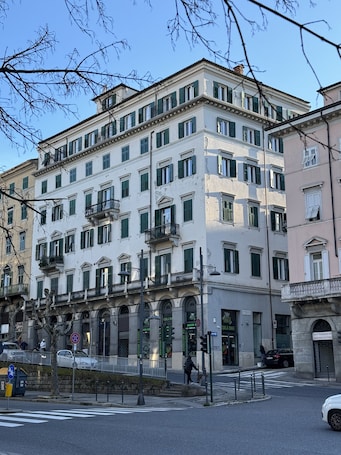

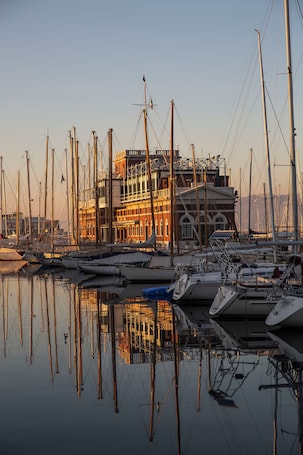
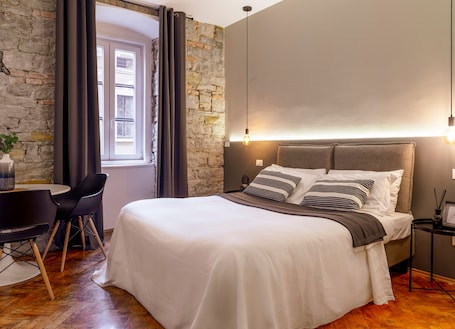
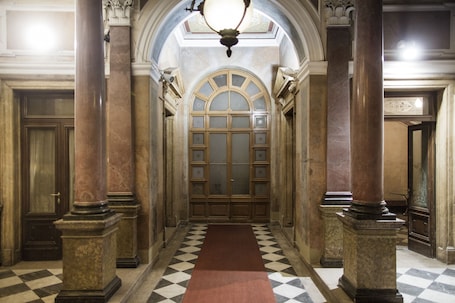

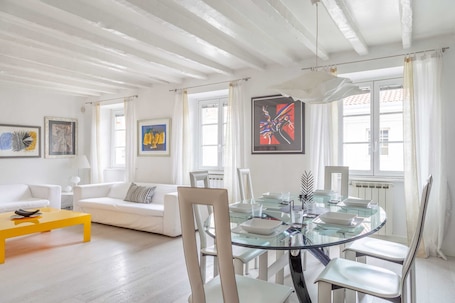
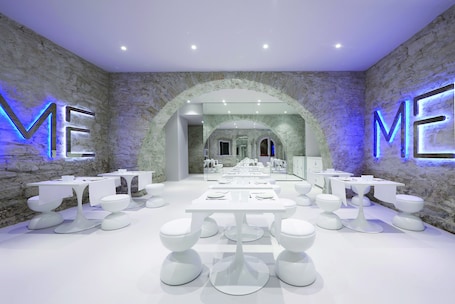

| Hotel | Area | Rating | Price / night |
|---|---|---|---|
| Al Garibaldino Rooms | Barriera Vecchia-San Giacomo | ★ 4.9 | 71 €/nuit |
| Affittacamere Berzi | Vieille ville de Trieste | ★ 3.9 | 77 €/nuit |
| Hotiday Trieste Corso Italia | Vieille ville de Trieste | ★ 2.5 | 79 €/nuit |
| Smart Rooms | Vieille ville de Trieste | ★ 4.2 | 80 €/nuit |
| Albergo N. Brioni ★★ | Centre-ville de Trieste | ★ 3 | 81 €/nuit |
| Residence Garibaldi ★★★ | Barriera Vecchia-San Giacomo | ★ 4.1 | 84 €/nuit |
| ROSSETTI ROOMS | Città Nuova-Barriera Nuova-San Vito-Città Vecchia | ★ 4.5 | 86 €/nuit |
| Residence Theresia ★★★ | Vieille ville de Trieste | ★ 4.3 | 87 €/nuit |
| Hotello Hostel | Vieille ville de Trieste | ★ 4.2 | 87 €/nuit |
Trieste sits at the northeastern tip of Italy, wedged between the Adriatic Sea and the Karst plateau, closer to Ljubljana than to Rome. It spent centuries as the main port of the Habsburg Empire, and that history is impossible to miss: the grid of neoclassical palaces, the coffeehouses where James Joyce wrote, the multicultural mix of Italian, Slovenian, and Central European influences. This is not a mass-tourism destination, and that is precisely the point. Visitors arrive for the literary heritage, the bora wind rolling off the plateau, the exceptional seafood and local Terrano wine, and a pace of life that feels genuinely unhurried.
The city is small enough to walk almost everywhere. Piazza Unità d'Italia, one of the largest seafront squares in Europe, anchors the center. The old Borgo Teresiano neighborhood spreads north of it around the Canal Grande, lined with cafes and independent shops. Uphill, the hilltop neighborhood of San Giusto holds the cathedral and the castle with panoramic views over the gulf. Choosing where to stay in Trieste is mostly a question of budget and atmosphere rather than logistics, because distances between neighborhoods are short.
Which area to stay in Trieste?
- Old Town (Città Vecchia): The historic core clustered around Piazza Unità d'Italia and the waterfront. Best for first-time visitors who want to walk everywhere, be close to the main museums, and feel the full weight of Habsburg grandeur. Most of the available hotels in this guide are located here.
- Borgo Teresiano: The 18th-century planned grid north of the main square, built around the Canal Grande. Excellent cafe culture, local trattorias, and an animated evening scene. A strong choice for travelers who prefer neighborhood texture over landmark proximity.
- San Giusto (Colle di San Giusto): The hilltop above the old town, quieter and residential. Ideal for travelers who prioritize views and calm over convenience. Worth visiting for the castle and cathedral even if you sleep lower down.
- Rive (Seafront Promenade): The long waterfront boulevard stretching south from Piazza Unità. More of a corridor than a neighborhood, but hotels here offer direct sea views and a breezy, open feeling that is hard to match.
- Roiano and Barcola: Residential coastal neighborhoods a short bus ride north of the center, popular with locals in summer for the public beach at Barcola. A genuine off-the-beaten-path option for repeat visitors or longer stays.
Good to know
- Arrive by train if possible: Trieste Centrale station is well connected to Venice (about 2 hours), Ljubljana (2.5 hours), and Vienna with a change. The station sits at the southern edge of the center, within walking distance of most hotels, and avoids the parking headaches that come with driving into a dense port city.
- Book ahead for summer and the Barcolana regatta: July and August draw visitors to the seafront and the Miramare Castle grounds. The Barcolana sailing regatta in October is one of the largest in the world by boat count and fills every hotel in the city weeks in advance. Outside those windows, availability is generally good.
- Check your note scores carefully: Among the hotels listed here, Hotiday Trieste Corso Italia carries a 1/5 note, which is a strong signal to investigate reviews before booking regardless of its price point. Other properties in the same brand (Hotiday Trieste Teatro) score significantly higher, so read individual listings rather than relying on brand alone.
- Dress for the bora: Trieste's famously strong northeast wind can arrive without warning, even in spring and autumn. A windproof layer is useful year-round, and outdoor terraces and seafront walks can become uncomfortable very quickly when the bora picks up.
- Use the city buses for day trips: The Opicina tramway (historically a scenic funicular-tram hybrid) has had extended maintenance closures in recent years. Bus line 2 serves the Karst plateau area in its absence. For Miramare Castle and Barcola beach, bus 6 from the center is fast, cheap, and runs frequently.
What to know about hotels in Trieste?
What is the best area to stay in Trieste for a first visit?+
The Old Town (Città Vecchia) and the adjacent seafront around Piazza Unità d'Italia give first-time visitors the most immediate access to Trieste's key sights, cafes, and the waterfront. Hotels like the DoubleTree by Hilton Trieste (274 euros per night, 4.7/5) and the You.Me Design Place Hotel (176 euros per night, 4.8/5) are both located in this area and represent solid anchors at different price levels.
What is the best time of year to visit Trieste?+
Late spring (May to June) and early autumn (September to early October) offer the most comfortable conditions: mild temperatures, fewer crowds than summer, and the city running at full pace. Summer is warm and lively but the seafront fills up. October brings the spectacular Barcolana regatta but also full hotels and higher prices. Winter is quiet, cold, and occasionally punctuated by dramatic bora wind events that locals consider part of the city's character.
What is the average hotel budget for a night in Trieste?+
Based on current availability, budget-conscious travelers can find options starting around 80 to 94 euros per night (Smart Rooms, Le Terrazze, Hotiday Trieste Teatro). Mid-range design options land in the 106 to 176 euro range (Urbanauts Studios Minelli, You.Me Design Place Hotel). Full-service four-star hotels such as the DoubleTree by Hilton and Urban Hotel Design sit between 259 and 274 euros per night.
How do you get from Trieste Airport to the city center?+
Trieste Airport (Aeroporto Friuli Venezia Giulia) is located in Ronchi dei Legionari, roughly 35 kilometers from the city center. The APT bus service connects the airport to Trieste Centrale train station in about 50 minutes. Taxis and rideshare options are also available but cost significantly more. Many visitors flying into the region also use Venice Marco Polo Airport and connect by train or coach.
Is Trieste a walkable city, or do you need a car?+
Trieste is highly walkable for the central neighborhoods: the Old Town, Borgo Teresiano, the seafront Rive, and San Giusto hill are all reachable on foot from a centrally located hotel. A car is unnecessary for most visits and actively inconvenient for parking in the dense historic core. Local buses cover the wider city efficiently and are the practical choice for reaching Barcola beach or the Karst plateau for day excursions.
Plan your stay in Trieste
Tell us your wish, your dates and your budget. Charlize puts together hotels, activities and tables in one conversation.