Hotels in Cartagena, Spain: Where to Stay in 2025
Updated 28 September 2026 · 78 real hotels
For most visitors, the Casco Antiguo is the smartest base: it puts Roman ruins, tapas bars, and the waterfront within walking distance. Beach lovers and golfers should look toward Cabo de Palos or La Manga Club, both a short drive south along the Costa Cálida.
Your stay in Carthagène, in one conversation
Charlize builds hotels, activities and dining around your wishes, dates and budget.
Where to stay on any budget?
A real selection, real prices, from the most affordable to the showstopper.







| Hotel | Area | Rating | Price / night |
|---|---|---|---|
| Hotel Trabuco ★★★ | San Javier | ★ 3.9 | 28 €/nuit |
| Hotel Portmán ★★ | La Unión | ★ 4.6 | 50 €/nuit |
| Hotel Mar Menor ★★★ | San Javier | ★ 4.2 | 53 €/nuit |
| Hotel Universal Murcia ★ | Murcie | ★ 3.7 | 55 €/nuit |
| Espacio Finca Alegría ★★★ | Perín | ★ 4 | 57 €/nuit |
| El Secreto del Agua ★★★ | Mar de Cristal | ★ 4.6 | 59 €/nuit |
| Los Narejos ★★ | Los Alcazares | ★ 4.3 | 59 €/nuit |
| Hotal Azahar ★★★ | Murcie | ★ 4.4 | 60 €/nuit |
| Hotel Cristina ★★★ | Los Alcazares | ★ 4.7 | 66 €/nuit |
Cartagena, Spain: A Port City That Earns a Longer Stay
Cartagena sits on the southeastern coast of Murcia, sheltered by a deep natural harbour that has attracted Carthaginians, Romans, and Moors across three millennia. Unlike many Spanish coastal cities that lean entirely on their beaches, Cartagena balances a genuinely rich archaeological layer, a compact and walkable old town, and easy access to the Mar Menor lagoon. It is the kind of place where you can spend a morning at the Roman Theatre Museum, eat lunch beside the fishing port, and reach a calm Mediterranean beach before sunset.
The city is not yet overrun with mass tourism, which keeps prices reasonable and the local atmosphere intact. A new cruise-ship terminal brings day visitors, but those who sleep here get the streets largely to themselves in the evenings. The combination of culture, coast, and value makes Cartagena one of the more underrated city-beach hybrids on the Spanish Mediterranean.
Which area to stay in Carthagène?
- Casco Antiguo (Old Town): The obvious choice for first-time visitors. Roman ruins, the main shopping street, rooftop bars, and the waterfront promenade are all on foot. Hotels here range from budget B&Bs to sharp four-star properties.
- Hondón: A quieter residential district just west of the historic centre, a short walk from the main sights. Good for travellers who want slightly lower noise levels without losing walkability.
- Cartagena Puerto (Port Area): Directly on the harbour, ideal for those arriving by ferry or cruise and wanting immediate access to the water. Lively in summer evenings.
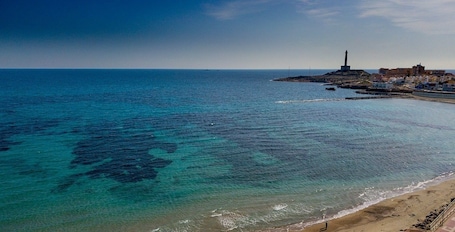
- Cabo de Palos: A small fishing village about 25 km east of the city, perched between the Mar Menor and the open Mediterranean. Excellent seafood restaurants and calm waters make it a favourite with divers and families.
- La Manga del Mar Menor / Rincón de San Ginés: The long sand spit enclosing the Mar Menor lagoon. Shallow, warm, and wind-protected water on one side, open sea on the other. Best suited to resort-style stays, families, and golfers.
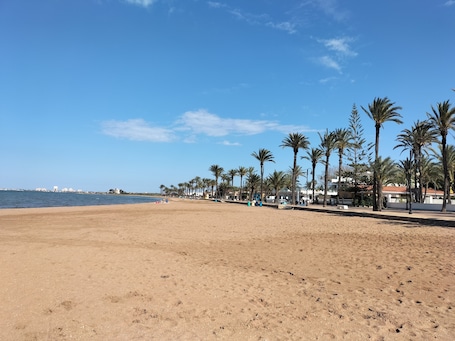
- Los Alcázares / Mar Menor Coast: The western shore of the Mar Menor, popular with Spanish families for its flat beaches and gentle conditions. A practical base if you are touring the region by car.
Good to know
- Arriving by air: Murcia International Airport (RMU) at Corvera is the closest option, roughly 35 km from the city centre. Alicante Airport (ALC) is about 90 km north and offers far more flight connections, particularly from the UK and northern Europe. Car hire or a pre-booked transfer is the most practical solution from either airport, as public bus connections are limited.
- Getting around the city: The Casco Antiguo is compact and best explored on foot. A free panoramic lift (the Ascensor Panorámico) and several escalator systems connect the hilltop fortifications to street level. Renting a car is advisable if you plan to visit Cabo de Palos, La Manga, or inland Murcia.
- Best season to visit: Late spring (April to June) and early autumn (September to October) offer warm temperatures, calmer seas, and far fewer crowds than the peak summer weeks. July and August are very hot (regularly above 35°C) and prices rise sharply near the coast.
- Book the Roman Theatre Museum in advance: It is the city's headline attraction and entry windows can fill up on busy weekends. Booking online a few days ahead avoids disappointment.
- Eating and drinking rhythms: Like all of Murcia, Cartagena eats late. Lunch rarely starts before 2 pm and dinner before 9 pm. The tapas culture here is generous: in many traditional bars, a small tapa arrives automatically with each drink order.
What to know about hotels in Carthagène?
What is the best area to stay in Cartagena, Spain?+
The Casco Antiguo suits the majority of visitors: it is walkable, full of restaurants and bars, and close to every major museum and the harbour. Travellers who prioritise beach access over city sightseeing will be happier basing themselves in Cabo de Palos or along the La Manga strip, both reachable in about 25 to 30 minutes by car.
When is the best time to visit Cartagena?+
April to June and September to October are the sweet spots: temperatures are comfortable, the sea is warm enough to swim from late May onward, and the city is not at peak capacity. The Carthagineses y Romanos festival in late September is one of the largest historical reenactment events in Spain and worth timing a visit around.
How much does a hotel in Cartagena typically cost?+
Based on available options, nightly rates start around 64 to 79 euros for three-star and entry-level four-star hotels in the old town. Mid-range four-star properties in the centre run from roughly 97 to 131 euros per night. A luxury five-star resort experience near La Manga Club is in the range of 370 euros per night.
How do I get from the airport to central Cartagena?+
From Murcia International Airport (Corvera), a taxi or ride-share to the city centre takes around 30 to 40 minutes. From Alicante Airport, the journey by car is approximately 80 to 90 minutes depending on traffic. Direct public bus connections from either airport to Cartagena are infrequent, so pre-arranging a transfer or hiring a car is strongly recommended.
Is Cartagena a good base for day trips?+
Yes. The city sits within easy reach of the Sierra Minera landscapes, the salt flats of the Parque Regional de Calblanque (one of the least developed beaches on the Spanish Mediterranean), and the regional capital Murcia, about 50 km inland. Alicante to the north and the historic town of Lorca to the west are both manageable half-day excursions by car or train.
Plan your stay in Carthagène
Tell us your wish, your dates and your budget. Charlize puts together hotels, activities and tables in one conversation.