Where to Stay in Bruges: Best Hotels & Neighborhoods
Updated 22 October 2026 · 255 real hotels
The Historic Centre is the top choice for first-time visitors, putting canals, Burg Square and the Markt within walking distance. For a quieter pace, the area around Sint-Anna or the southern ring canals offers a more local feel while staying close to the action.
Your stay in Bruges, in one conversation
Charlize builds hotels, activities and dining around your wishes, dates and budget.
Where to stay on any budget?
A real selection, real prices, from the most affordable to the showstopper.


| Hotel | Area | Rating | Price / night |
|---|---|---|---|
| ibis budget Blankenberge ★★ | Blankenberge | ★ 3.8 | 61 €/nuit |
| Hotel Vredehof ★★ | Sijsele : à 7,5 km de Bruges | ★ 5 | 86 €/nuit |
| Beach Hotel Helios by CW Hotel Collection ★★★★ | Blankenberge | ★ 4.5 | 101 €/nuit |
| Hotel 't Keizershof | Bruges | ★ 3.7 | 102 €/nuit |
| Holiday Suites Jabbeke | Jabbeke | ★ 4.1 | 105 €/nuit |
| ibis budget Brugge Centrum Station ★ | Centre historique de Bruges | ★ 3.9 | 117 €/nuit |
| Snuffel Hostel | Bruges | ★ 4.8 | 121 €/nuit |
| The Lake Suites | Bruges | ★ 4.2 | 125 €/nuit |
| Hotel Olympia ★★★★ | Sint-Andries | ★ 4.1 | 133 €/nuit |
Our hotel profiles in Bruges
 Boutique Hotel Sablon by CW Hotel Collection★★★★ · €265
 Pand 17 - Charming Guesthouse€236
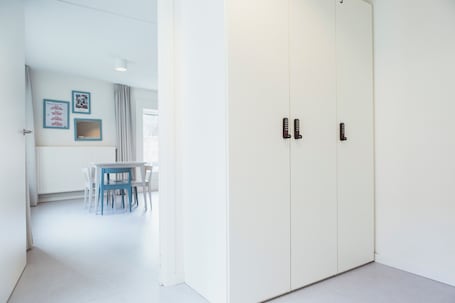 Snuffel Hostel€121
 Martin's Brugge★★★ · €194
 ibis budget Brugge Centrum Station★ · €117
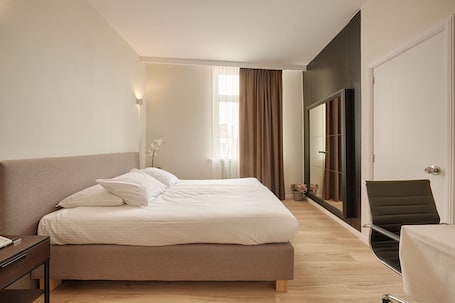 Hotel 't Putje€136
 Velotel Brugge★★★★ · €145
 Dukes’ Palace – by Dukes’ Hotel Collection★★★★★ · €354
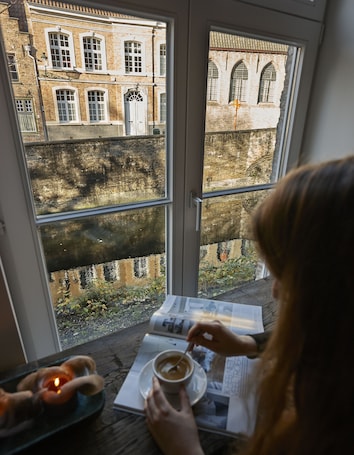 Monsieur Ernest★★★ · €203
 Golden Tulip De' Medici Hotel★★★★ · €202
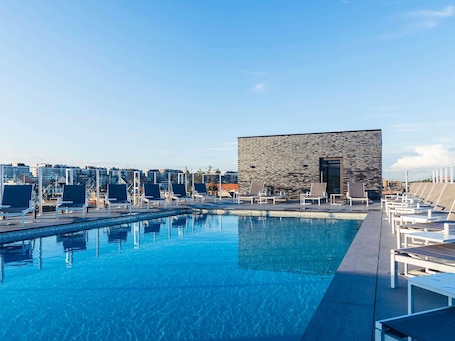 ibis budget Blankenberge★★ · €61
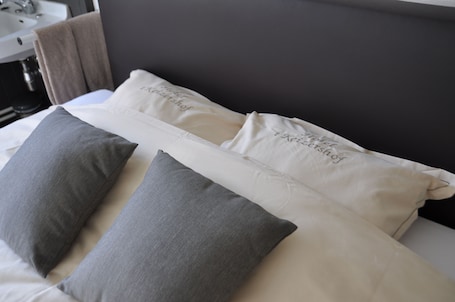 Hotel 't Keizershof€102
Bruges is one of the best-preserved medieval cities in Europe, a compact Flemish town where brick-lined canals reflect Gothic spires and horse-drawn carriages still clatter across cobblestones. The entire historic core is a UNESCO World Heritage Site, which means the city centre itself is the attraction: there is no wrong neighbourhood to base yourself in, only trade-offs between atmosphere, noise level and price.
Because Bruges is genuinely small (you can cross the historic centre on foot in about 20 minutes), your hotel's precise location matters less than its quality and your own travel rhythm. Weekends fill fast year-round, and the Christmas market period from late November to early January is effectively sold out months in advance. Book early, arrive by late afternoon when the day-trip crowds thin out, and the city becomes a completely different, far more intimate experience.
Which area to stay in Bruges?
- Markt and Burg (City Centre): The beating heart of Bruges, ideal for first-timers who want everything on their doorstep. Expect the most foot traffic during the day and a calmer evening atmosphere once tour groups leave.
- Sint-Gillis and Sint-Anna (North-East): A quieter, residential quarter popular with independent travellers. Windmills, small brown cafés and fewer crowds make it the favourite of repeat visitors.
- 't Zand and Koning Albert I-laan (South-West): Home to the Concertgebouw concert hall and the weekend market on the square. Good transport connections and slightly lower hotel prices than the very centre.
- Walplein and Wijngaard (South Canal Ring): Bruges at its most postcard-perfect, close to the Begijnhof and the Lake of Love. Perfect for couples and photographers who prioritise scenery over proximity to shops.
- Blankenberge (Coast, 15 km away): A North Sea resort town reachable by train in around 15 minutes. A practical base if you want beach access combined with day trips into Bruges, with hotels at more accessible price points.
Good to know
- Arrive on a weekday if possible: Bruges receives more than eight million visitors per year despite having only 20,000 residents in the centre. Weekday arrivals mean shorter queues, easier check-in and a noticeably quieter canal-side experience.
- Walk or cycle, do not drive: The historic centre is largely car-restricted. Most hotels sit within the pedestrian zone, so use the free Park and Ride facilities at the station or at the Bargeplein lot and continue on foot or by hire bike.
- Book well ahead for peak periods: Spring weekends (April to June), the Procession of the Holy Blood (Ascension Day), and the entire Christmas market season fill accommodation months in advance. Rates during these windows are significantly higher.
- Use the train for airport transfers: Brussels Airport (BRU) is roughly 90 minutes from Bruges by direct IC train (change at Brussels or Ghent depending on the service). Brussels-Midi (Eurostar and Thalys hub) is about an hour. Taxis are expensive and rarely faster.
- Pack for changeable weather: Bruges has a maritime climate. Even in summer, a light waterproof layer is useful. The driest and warmest months are June through August, but spring and autumn offer softer light and far fewer crowds.
What to know about hotels in Bruges?
What is the best area to stay in Bruges for a first visit?+
The Historic Centre, particularly within a short walk of the Markt or Burg Square, is the most convenient base. You can reach every major sight on foot and experience the city at its best in the early morning and evening once day visitors have left.
When is the best time of year to visit Bruges?+
Late April through June and September through October offer the best balance of decent weather, manageable crowds and reasonable hotel rates. July and August are warm but very busy. The Christmas market (late November to early January) is magical but requires booking accommodation many months ahead.
What is the average hotel budget for a night in Bruges?+
Mid-range four-star hotels in the centre typically run from around 200 to 280 euros per night, as reflected in options like Martin's Brugge at 194 euros or Hotel Navarra Brugge at 269 euros. Coastal alternatives in Blankenberge, such as Beach Hotel Helios at 132 euros per night, offer a more affordable option if you are comfortable with a short train ride into the city.
How do I get from Brussels Airport to Bruges?+
The most practical option is the train: take any IC service from Brussels Airport (Zaventem) toward Ghent or Bruges and plan for roughly 90 minutes total travel time, sometimes with one change. Trains run frequently and tickets are affordable compared to private transfers.
Is Bruges a good base for exploring the wider Belgian coast?+
Yes. Bruges is connected to the entire Belgian coastal tramway (De Lijn Kusttram), the longest tram line in the world, which runs from De Panne to Knokke-Heist and stops at all seaside resorts including Blankenberge. From Bruges station you can be at the coast in under 20 minutes, making it an ideal inland hub combined with easy beach-day options.
Plan your stay in Bruges
Tell us your wish, your dates and your budget. Charlize puts together hotels, activities and tables in one conversation.